A Practical Guide to Cost, Value, and Deployment
A Battery Energy Storage System (BESS) enables businesses to store electricity and use it when it creates the most value—during peak tariffs, outages, or high-demand periods. For commercial and industrial users, BESS commercial UAE projects are becoming a core tool for cost control, resilience, and energy optimization, especially when paired with on-site solar.
What Is a Battery Energy Storage System?
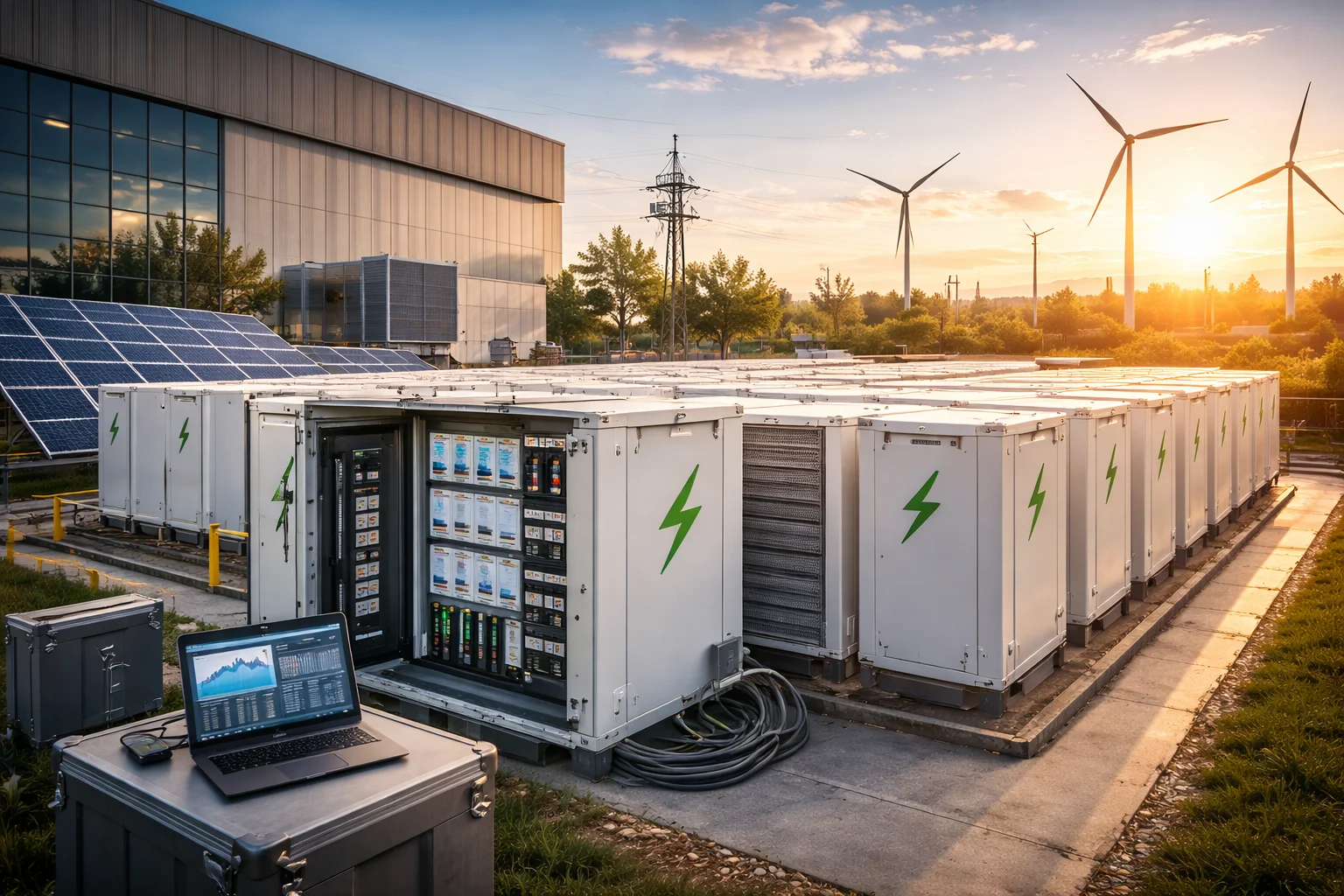
A battery energy storage system captures electricity—typically from the grid or on-site renewables—and releases it later through intelligent control software. In commercial and industrial settings, BESS is designed to:
- Reduce peak demand charges
- Improve power reliability and uptime
- Optimize energy costs
- Support sustainability and decarbonization goals
Most modern systems rely on lithium battery storage for industrial use due to its efficiency, lifespan, and scalability.
Why BESS Is Gaining Momentum in the UAE
The UAE, and Dubai in particular, offers ideal conditions for energy storage solutions in Dubai:
- High daytime energy consumption
- Growing adoption of commercial solar
- Demand charges and time-of-use pricing structures
- Strong focus on energy efficiency and ESG
For businesses, BESS is no longer experimental—it’s a proven infrastructure investment.
Key Commercial & Industrial Use Cases
1. Peak Shaving and Demand Charge Reduction
BESS discharges power during peak demand periods, lowering maximum grid draw.
Impact
- Immediate reduction in electricity bills
- Predictable monthly energy costs
- Faster project payback
This is one of the most common drivers for BESS commercial UAE deployments.
2. Solar + Storage Optimization
When combined with rooftop or ground-mounted PV, BESS stores excess solar generation for later use.
Benefits
- Higher solar self-consumption
- Reduced export dependency
- Improved overall solar ROI
This pairing is especially effective for facilities with daytime and evening loads.
3. Backup Power & Operational Resilience
BESS provides fast-response backup power during grid interruptions.
Use cases
- Manufacturing lines
- Data centers
- Logistics hubs
- Critical commercial operations
Unlike diesel generators, battery systems respond instantly and operate silently.
4. Energy Arbitrage
In markets with variable tariffs, BESS charges when electricity is cheaper and discharges when prices are higher.
Result
- Lower average energy cost
- Smarter energy procurement
As tariff structures evolve, this use case is expected to grow.
Lithium Battery Storage for Industrial Applications
Most modern BESS projects rely on lithium-ion battery storage, offering:
- High energy density
- Long cycle life (often 6,000+ cycles)
- High round-trip efficiency
- Modular scalability
For industrial users, lithium batteries strike the best balance between performance, footprint, and total cost of ownership.
System Components That Matter
A commercial or industrial BESS typically includes:
- Battery modules and racks
- Power conversion systems (PCS / inverters)
- Energy management system (EMS)
- Safety, cooling, and fire protection systems
- Monitoring and analytics
System design quality directly impacts safety, performance, and ROI.
Cost, ROI, and Payback Expectations
While costs vary by size and configuration, energy storage solutions in Dubai are becoming increasingly cost-effective.
Key financial drivers
- Reduced demand charges
- Increased solar utilization
- Avoided downtime costs
- Minimal operating expenses
For many commercial and industrial projects, payback periods range from 4 to 7 years, with asset lifespans extending well beyond that.
Safety, Compliance, and Best Practices
For industrial environments, safety and compliance are critical:
- Proper thermal management
- Fire detection and suppression
- Certified components and standards
- Professional installation and commissioning
Working with experienced engineering teams is essential to ensure long-term, risk-free operation.
Is BESS Right for Your Business?
BESS is particularly suitable for organizations that:
- Face high peak electricity charges
- Operate critical or continuous processes
- Have or plan to install solar PV
- Seek greater energy independence and predictability
Manufacturing, logistics, retail, hospitality, and large commercial facilities are among the strongest candidates.
The Future of Commercial & Industrial Energy Storage
Advances in battery chemistry, AI-based energy management, and grid integration are rapidly expanding what BESS can deliver. Over the next few years, storage systems will increasingly act as active energy assets, not just backup infrastructure.
For forward-looking businesses, BESS is becoming a strategic component of energy and cost management.
Battery Energy Storage Systems (BESS) are transforming how commercial and industrial users manage power. By combining lithium battery storage for industrial use with intelligent control, businesses gain lower costs, higher reliability, and better sustainability outcomes.
As energy storage solutions in Dubai continue to mature, now is the right time for organizations to evaluate BESS—not as a future option, but as a competitive advantage today.
Written by the Arni Energy Solar Experts Team
📆 Updated: Feb 2026