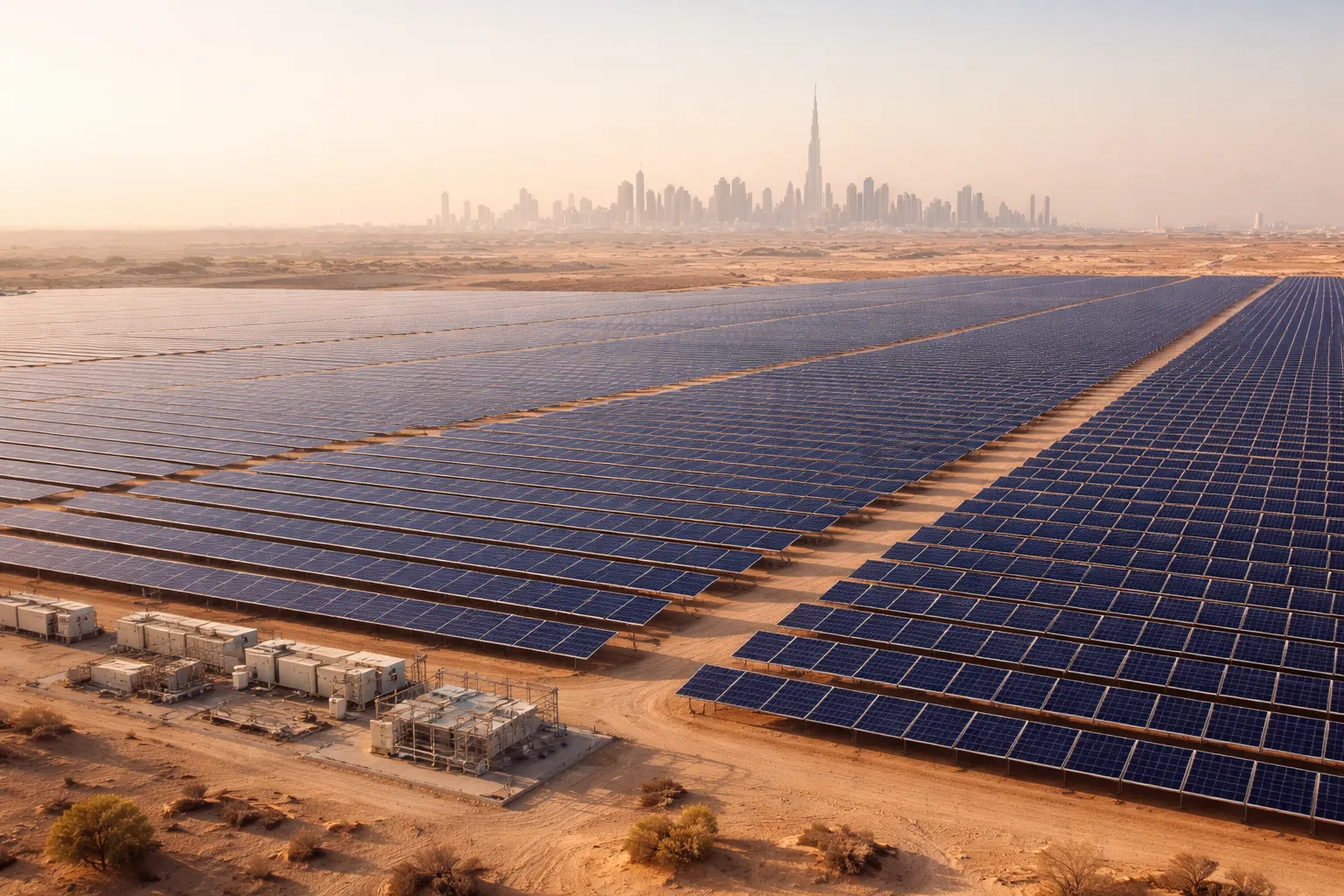
The Middle East has become one of the world’s most attractive regions for utility-scale solar development. Exceptional solar resources, government-backed programs, and long-term power purchase agreements (PPAs) are drawing renewable energy investors toward large-scale solar projects across the UAE and the wider region. For investors, understanding the structure, risks, and returns of these projects is essential.
Why the Middle East Is a Global Hub for Utility-Scale Solar
Several structural advantages make the region uniquely suited for utility scale solar in the Middle East:
- High solar irradiance and predictable generation profiles
- Abundant land suitable for large installations
- Strong government commitment to energy transition
- Long-term, USD-pegged revenue frameworks (in many markets)
- Rapidly growing electricity demand
These factors combine to create stable, infrastructure-grade investment opportunities.
What Defines a Utility-Scale Solar Project?
Utility-scale solar projects typically refer to installations ranging from tens to hundreds of megawatts, designed to supply electricity directly to the grid rather than on-site consumers.
Key characteristics include:
- Centralized solar PV or CSP facilities
- Long-term offtake agreements (often 20–25 years)
- Grid-scale interconnection
- Institutional-grade financing and governance
For investors, these projects behave more like energy infrastructure than traditional real estate or corporate assets.
Solar Investment in the UAE: A Regional Benchmark
The UAE is widely regarded as a benchmark for solar investment UAE projects due to its transparent procurement processes and bankable frameworks.
Notable features include:
- Competitive bidding and tendering
- Government-backed or utility-backed PPAs
- Strong regulatory oversight
- Clear land and grid access arrangements
These elements significantly reduce counterparty and regulatory risk for investors.
Revenue Models and Returns
Utility-scale solar projects typically generate revenue through fixed-price PPAs with national utilities or large offtakers.
Key return drivers
- PPA tariff structure and duration
- Capacity factor and system performance
- Financing terms and cost of capital
- Operating and maintenance efficiency
While returns are generally more conservative than high-risk ventures, they are stable, long-term, and predictable, aligning well with infrastructure and institutional investment mandates.
Risk Factors Investors Should Evaluate
Despite their stability, large scale solar projects are not risk-free. Key considerations include:
1. Regulatory and Policy Risk
Changes in energy policy or procurement frameworks can affect future projects, though operating PPAs are typically protected.
2. Construction and Execution Risk
Delays or cost overruns during EPC phases can impact project timelines and returns.
3. Grid and Curtailment Risk
Grid capacity and dispatch priorities must be carefully assessed, especially in rapidly expanding markets.
4. Counterparty Risk
The creditworthiness of the offtaker under the PPA is central to long-term project viability.
Professional due diligence is critical at every stage.
The Role of Scale and Technology
Scale drives efficiency in utility-scale solar:
- Lower cost per megawatt installed
- Improved procurement and EPC economics
- Advanced monitoring and performance analytics
Technological advances in panels, trackers, and energy management systems continue to improve output and reduce lifetime costs—enhancing project bankability.
Why Institutional and Long-Term Investors Are Leading the Market
Renewable energy investors such as infrastructure funds, sovereign wealth funds, and pension funds are particularly well-suited to utility-scale solar.
These projects offer:
- Long-term, inflation-aligned cash flows
- Low operational volatility
- Alignment with ESG and decarbonization mandates
As a result, competition for high-quality projects is increasing across the Middle East.
Strategic Partnerships Matter
Successful solar investments rely heavily on strong development, EPC, and operational partners. Collaborating with experienced groups that understand regional markets, regulation, and execution reduces risk and accelerates deployment.
Partnerships involving organizations such as Aras Holding demonstrate how local expertise combined with international standards can unlock scalable, bankable solar assets.
Outlook: What’s Next for Utility-Scale Solar in the Region
Looking ahead, several trends are shaping the next phase of growth:
- Integration of grid-scale battery storage
- Hybrid solar-plus-storage projects
- Expansion into new regional markets
- Increased private-sector participation
Utility-scale solar is evolving from a niche renewable option into a core pillar of Middle Eastern energy infrastructure.
Utility-scale solar projects in the Middle East represent a compelling opportunity for investors seeking stable, long-term returns aligned with global energy transition goals. With strong fundamentals, supportive policy environments, and growing demand, the region is set to remain a global leader in large-scale solar deployment.
For investors who understand the risks, structures, and partnerships required, utility-scale solar offers not just clean energy—but resilient, future-proof infrastructure value
Written by the Arni Energy Solar Experts Team
📆 Updated: Mar 2026