
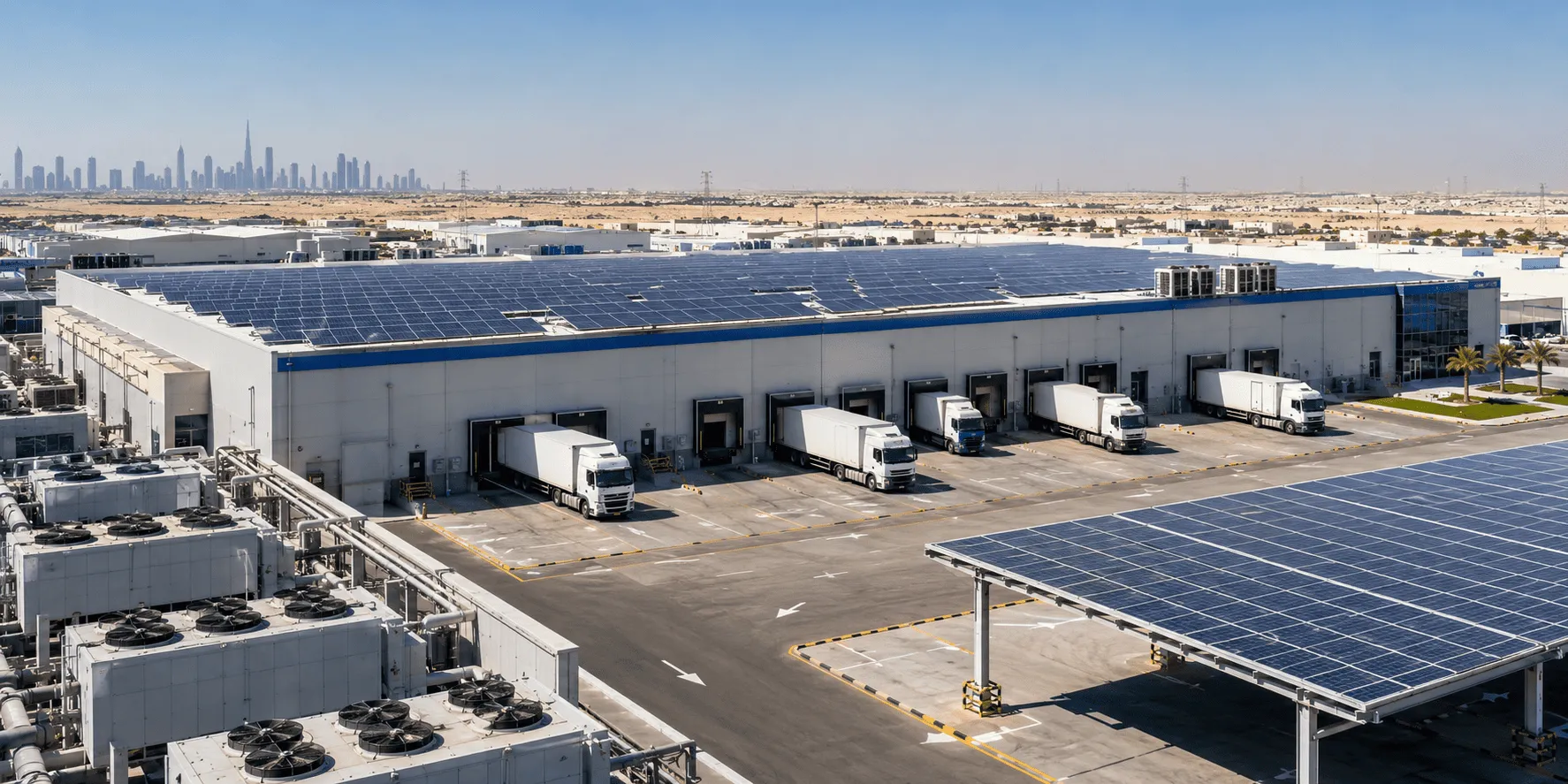
Cold storage facilities and logistics centers are among the most energy-intensive commercial and industrial operations. These facilities typically operate around the clock, with a significant portion of their electricity consumption dedicated to refrigeration, cooling systems, ventilation, and storage infrastructure. As a result, energy costs often represent a major part of operational expenses.
For many businesses in the UAE, solar energy has become a practical solution for reducing electricity costs and improving long-term operational efficiency. However, the success of these projects depends on proper system design, accurate consumption analysis, and selecting the right system capacity.
Why Are Cold Storage Facilities Well-Suited for Solar Energy?
Cold storage facilities usually have high and relatively consistent electricity demand throughout the day. This makes them particularly suitable for solar energy systems, as a large portion of their energy consumption overlaps with peak solar production hours.
Key advantages include:
- High electricity consumption
- Continuous operational demand
- Strong alignment with daytime solar generation
- Significant potential for energy cost reduction
These characteristics make cold storage facilities one of the strongest commercial use cases for solar power.
How Solar Energy Supports Logistics Operations
In logistics centers, electricity is used for more than just cooling. Warehousing systems, lighting, material handling equipment, automation technologies, and operational infrastructure all contribute to overall energy demand.
A solar energy system can help businesses:
- Reduce monthly electricity expenses
- Lower dependence on grid-supplied power
- Improve long-term energy cost predictability
- Support sustainability objectives
For large logistics operators, these benefits can have a direct impact on operational profitability.
Designing a Solar System for Cold Storage Applications
A successful solar project begins with understanding how energy is consumed throughout the facility. System design should be based on actual operational requirements rather than simply maximizing the number of installed panels.
Typical considerations include:
- Daily and annual electricity consumption
- Cooling load profiles
- Peak demand periods
- Available rooftop space
- Structural limitations of the building
The goal is to design a system that delivers the highest practical economic value while supporting operational needs.
Choosing the Right System Capacity
One common mistake is sizing a solar system based solely on available roof space. In cold storage projects, energy consumption patterns should be the primary factor in determining system capacity.
Oversizing may reduce financial efficiency, while undersizing can limit potential savings.
System sizing is generally based on:
- Annual electricity demand
- Peak consumption periods
- Available installation area
- Financial objectives of the project
A balanced approach usually provides the strongest long-term results.
Challenges of Solar Projects for Cold Storage Facilities
Although solar energy offers significant benefits, there are also challenges that must be addressed during project planning.
Common challenges include:
- Continuous 24/7 energy demand
- Dependence on cooling systems
- Limited rooftop availability in some facilities
- Integration with existing electrical infrastructure
- Maintaining performance under demanding operating conditions
Addressing these factors during the design phase helps maximize project performance.
Solar Energy Models for Logistics Facilities
Most logistics facilities adopt one of two common approaches when implementing solar energy systems.
The first is direct on-site consumption, where solar power generated during the day is used immediately by the facility.
The second combines solar generation with grid electricity, creating a more balanced and reliable energy supply model.
The most suitable approach depends on energy demand, project objectives, and facility operations.
Evaluating Return on Investment
Reducing long-term operating costs is one of the primary reasons logistics and cold storage companies invest in solar energy.
Several factors influence ROI:
- Annual electricity consumption
- Utility tariffs
- Solar system capacity
- Quality of system design
- Investment model (EPC or PPA)
Facilities with high electricity demand often see stronger financial benefits from solar adoption because a larger share of generated power can be used directly on-site.
Solar Energy and Operational Reliability
For cold storage facilities, maintaining stable operations is critical. Any interruption in power supply can affect product quality, inventory management, and overall business continuity.
Solar energy, when integrated with the existing power infrastructure, can help:
- Improve energy resilience
- Reduce dependence on a single power source
- Support critical cooling operations
- Strengthen long-term operational stability
For large logistics and storage facilities, this can become an important strategic advantage.
Solar Energy as a Long-Term Strategy
For cold storage facilities and logistics centers in the UAE, solar energy is more than a cost-saving initiative. It is increasingly becoming part of a broader energy management and operational efficiency strategy.
When system sizing, energy analysis, and project design are properly aligned, solar power can help businesses reduce operating costs, improve sustainability performance, and strengthen long-term competitiveness.
Frequently Asked Questions
Are cold storage facilities suitable for solar energy systems?
Yes. Their high and consistent electricity consumption makes them strong candidates for commercial solar projects.
Can solar energy fully power a cold storage facility?
In most cases, solar energy supplements grid electricity rather than replacing it entirely, but it can significantly reduce daytime energy costs.
What is the main benefit of solar energy for logistics centers?
Lower electricity expenses and improved operational efficiency are among the key benefits.
Is system capacity determined only by roof size?
No. Electricity consumption patterns, operational requirements, and financial objectives are equally important factors.
Do solar projects for logistics facilities offer a good return on investment?
In many cases, yes. Facilities with high energy consumption often achieve attractive long-term savings and strong financial returns.