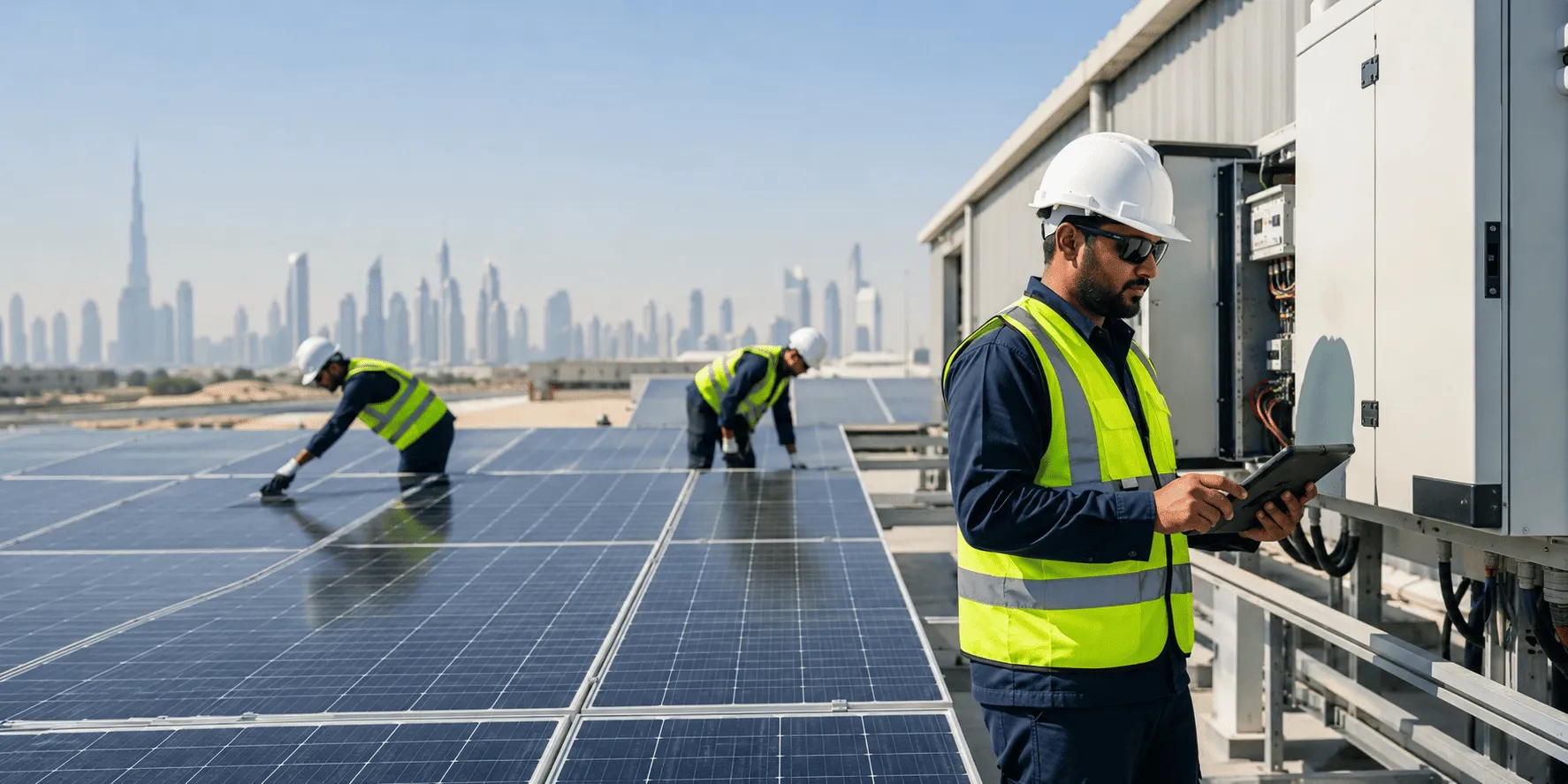
In commercial solar projects, a significant part of system performance depends on what happens after installation. Contrary to a common misconception, installing solar panels is not the final step of the project. Long-term success depends on effective operation and maintenance (O&M), which plays a critical role in maintaining energy production and protecting return on investment.
Without proper monitoring and maintenance, solar systems can gradually lose efficiency, reducing energy output and limiting the financial benefits of the project. This is why O&M is considered a core component of commercial and industrial solar asset management.
What Does Solar O&M Include?
Operation and Maintenance (O&M) involves much more than cleaning solar panels. It includes a range of technical and operational activities designed to keep the system performing as expected throughout its lifecycle.
Key O&M activities include:
- Monitoring system performance and energy generation
- Inspecting panels and electrical components
- Evaluating inverter performance
- Identifying and resolving technical issues
- Managing dust and environmental impacts
- Analyzing production and performance data
The goal is to maintain system output as close as possible to the original design expectations.
Why Is Maintenance Important for Commercial Solar Systems?
In small installations, minor performance losses may go unnoticed. However, in commercial and industrial systems, even a small reduction in energy production can affect operating costs and project profitability.
Effective O&M helps businesses:
- Minimize performance degradation
- Extend equipment lifespan
- Reduce major repair costs
- Protect long-term investment value
- Maintain reliable energy production
Without a structured maintenance strategy, even high-quality solar systems can experience avoidable performance losses over time.
How Is Solar System Monitoring Performed?
Monitoring is one of the most important elements of O&M. It allows operators to track system performance and identify issues before they develop into major failures.
Monitoring typically includes:
- Daily and monthly energy production
- Performance of individual system components
- Inverter status and fault detection
- Comparison of actual output against expected production
- Identification of underperforming areas
Access to accurate operational data enables faster decision-making and more effective maintenance planning.
Common Causes of Performance Loss
Some level of performance degradation is natural over the lifespan of a solar system. However, poor maintenance can significantly accelerate this process.
Common causes of reduced performance include:
- Dust accumulation on solar panels
- Inverter faults or reduced efficiency
- Electrical connection issues
- New shading conditions
- Lack of regular monitoring
- Component aging
Identifying and addressing these issues early helps maintain system efficiency.
The Importance of Solar Panel Cleaning
In regions such as the UAE, dust and environmental conditions can have a noticeable impact on solar performance. Even a thin layer of dirt can reduce energy production.
A well-planned cleaning program can help:
- Maintain energy output
- Improve overall system efficiency
- Reduce the risk of panel-related performance issues
- Support long-term equipment reliability
Cleaning schedules should be developed according to site conditions and operational requirements.
Why Inverter Performance Matters
The inverter is one of the most important components in a solar power system. As a result, inverter performance is a major focus of professional O&M programs.
Typical inverter-related inspections include:
- Operating temperature monitoring
- Fault analysis
- Conversion efficiency evaluation
- Communication and monitoring system checks
Because the inverter directly affects energy conversion, performance issues can impact the output of the entire system.
How O&M Affects Return on Investment
The financial success of a solar project depends not only on system design and equipment quality but also on how well the system performs over time.
A strong O&M strategy can:
- Maintain optimal energy production
- Reduce revenue losses from underperformance
- Lower unexpected repair expenses
- Extend the economic life of the system
For this reason, O&M is an important part of the overall financial planning of commercial solar projects.
Common O&M Models for Commercial Solar Projects
Businesses can manage solar O&M in different ways depending on project size and internal resources.
Common approaches include:
- In-house maintenance teams
- Outsourced O&M service providers
- Hybrid management models
Large commercial installations often rely on specialized O&M providers to ensure consistent performance and professional system management.
O&M as a Key Part of Solar Project Success
Operation and maintenance should not be viewed as an optional service. It is a critical component of long-term solar project performance. Even the most advanced systems can lose value if they are not properly monitored and maintained.
By incorporating O&M planning from the early stages of a project, businesses can protect system performance, maximize energy production, and preserve long-term investment returns.
Frequently Asked Questions
What is solar O&M?
Solar O&M refers to the operation, maintenance, monitoring, and performance management activities required to keep a solar system functioning efficiently.
Why is O&M important for commercial solar projects?
Because even small performance losses can affect energy production, operating costs, and overall return on investment.
What causes solar systems to lose efficiency?
Common causes include dust accumulation, inverter issues, electrical faults, shading, lack of monitoring, and natural component aging.
Is solar panel cleaning necessary?
Yes. In dusty environments such as the UAE, regular cleaning can play an important role in maintaining system performance.
How does O&M improve ROI?
By preserving energy production, reducing downtime, preventing major failures, and extending the system’s operational life.