
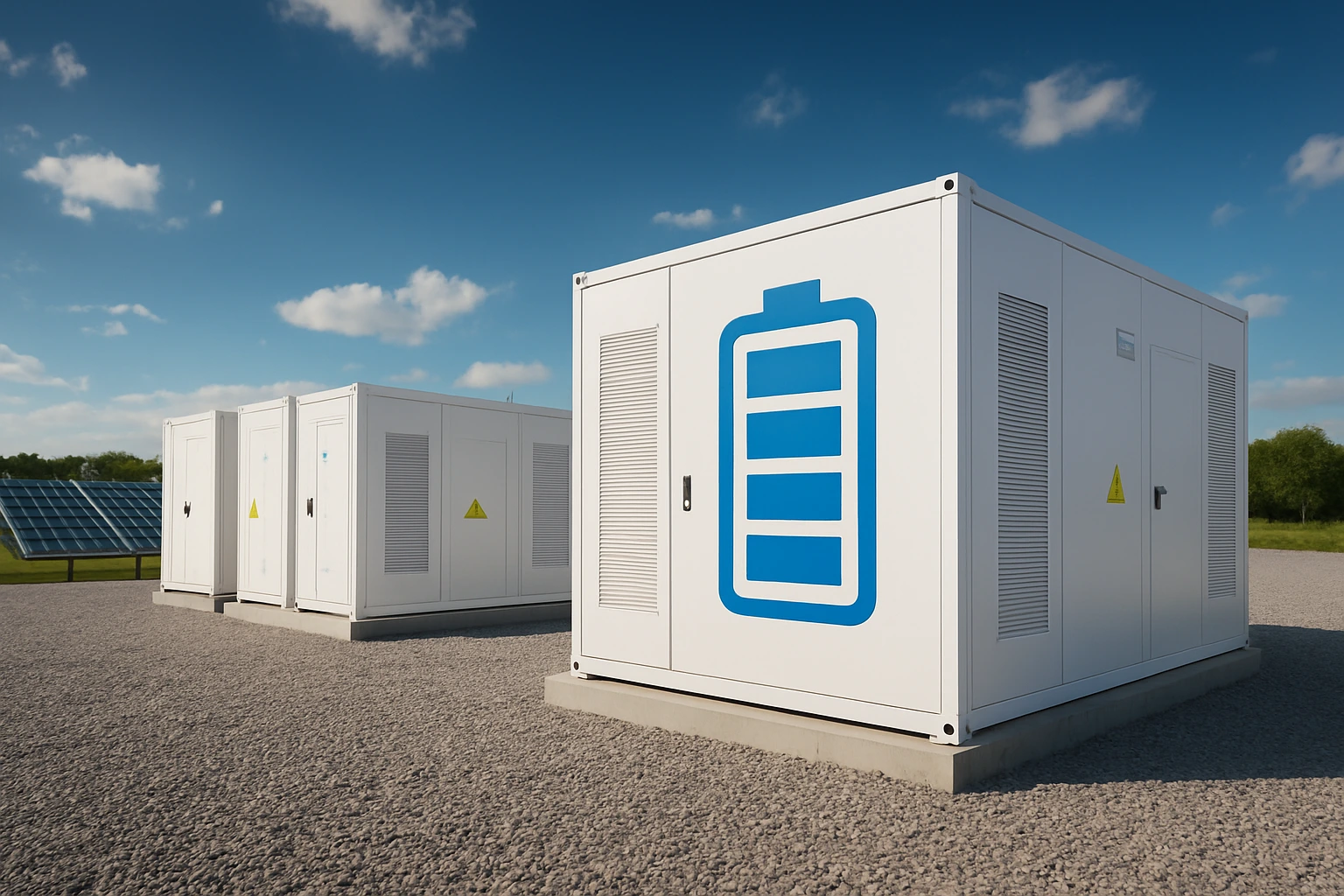
Understand the real economics of battery energy storage — from ROI and payback periods to scalability and cost optimization for businesses and utilities.
As renewable energy becomes a dominant force in the global energy mix, one key technology is driving its economic viability — battery energy storage systems (BESS).
Once considered too costly, battery storage has rapidly evolved into a financially attractive and scalable solution for utilities, businesses, and industrial operations.
But how exactly does energy storage translate into profit?
This article breaks down the economics behind battery systems — exploring return on investment (ROI), payback periods, and how scalability is reshaping the clean energy landscape.
The Financial Case for Battery Energy Storage
Energy storage is no longer just an environmental initiative — it’s a strategic financial decision.
By enabling energy arbitrage, peak shaving, and renewable optimization, BESS helps organizations save money, generate revenue, and reduce grid dependency.
Key economic benefits include:
- Lower electricity costs by storing power when prices are low and using it during peak rates.
- Enhanced energy security and reliability for critical operations.
- Participation in ancillary services like grid balancing and frequency regulation.
- Deferred infrastructure upgrades by stabilizing local energy demand.
In essence, batteries are transforming energy from a fixed cost into a flexible asset.
Cost Trends: Why Battery Storage Is More Affordable Than Ever
According to BloombergNEF, the cost of lithium-ion battery packs has dropped by over 85% since 2010 — from more than $1,200 per kWh to under $150 per kWh in 2024.
This cost decline, coupled with improved efficiency and longer lifespans, has made battery projects economically viable across commercial, residential, and utility sectors.
Factors contributing to this cost reduction include:
- Mass production and technological maturity.
- Higher energy density and reduced material waste.
- Better recycling and second-life applications.
- Global investments in Gigafactories and localized supply chains.
Understanding ROI and Payback Periods
Understanding ROI and Payback Periods
- Return on Investment (ROI):
ROI measures how much financial gain you get compared to your total investment.
In the case of battery systems, ROI typically ranges from 10% to 25% annually, depending on market conditions, energy tariffs, and usage patterns. - Payback Period:
This indicates how long it takes for the system to pay for itself through energy savings and revenue generation.
For most commercial and industrial applications, payback occurs within 3 to 7 years — with longer battery life extending total net returns. - Levelized Cost of Storage (LCOS):
LCOS combines installation, operation, and degradation costs to determine the true lifetime value of the system.
Modern BESS deployments are now reaching LCOS levels competitive with traditional peaker plants.
Revenue Streams and Value Stacking
Battery energy storage creates multiple revenue streams, often referred to as “value stacking.”
Revenue Stream | Description | Example |
Energy Arbitrage | Buy low, sell high | Charging batteries at night, discharging during peak hours |
Peak Shaving | Reduce high-demand charges | Factories flattening demand spikes |
Backup Power | Ensure reliability | Hospitals and data centers |
Grid Services | Support stability | Frequency and voltage regulation |
Renewable Optimization | Store excess solar/wind energy | Export or reuse when needed |
When combined strategically, these layers of value can double or even triple overall ROI.
Scalability: The Key to Long-Term Profitability
One of the greatest economic advantages of modern BESS is scalability.
Systems can start small — powering a single facility — and expand modularly into megawatt-scale installations for utilities.
Scalability lowers costs by:
- Enabling shared infrastructure and centralized monitoring.
- Adapting capacity to market growth or new renewable sources.
- Extending revenue potential without replacing the entire system.
Companies like Arni Energy specialize in scalable, modular battery systems designed to evolve with your energy needs — ensuring economic performance and flexibility.
Case Study Example
A manufacturing plant installing a 2 MWh lithium-ion storage system achieved:
- 25% reduction in electricity bills through demand management.
- 4.8-year payback period on capital investment.
- Continuous uptime during local grid outages, preventing $120,000 in lost productivity annually.
This demonstrates how BESS delivers both operational efficiency and measurable financial impact.
Policy, Incentives, and Market Support
Government policies and clean energy incentives are accelerating BESS adoption worldwide:
- Investment Tax Credits (ITC) in the U.S. now include standalone storage.
- Feed-in tariffs and carbon credits improve project profitability.
- Corporate ESG targets encourage companies to invest in clean technologies for brand and compliance benefits.
These frameworks reduce initial costs and improve payback dynamics, especially for commercial-scale deployments.
Challenges and Risk Factors
While the financial case for storage is strong, investors should consider:
- Degradation rates over time (capacity loss of 1–2% per year).
- Maintenance and temperature control requirements.
- Volatility in raw material prices.
- Evolving regulation for grid interconnection and recycling.
Mitigating these factors through predictive analytics and lifecycle management — such as those offered by Arni Energy — ensures consistent performance and ROI.
Battery energy storage is no longer just a technical solution — it’s a profitable business model driving the clean energy economy forward.
With costs declining, incentives expanding, and new technologies emerging, the path to ROI is clearer than ever.
Written by the Arni Energy Solar Experts Team
📆 Updated: November 2025