
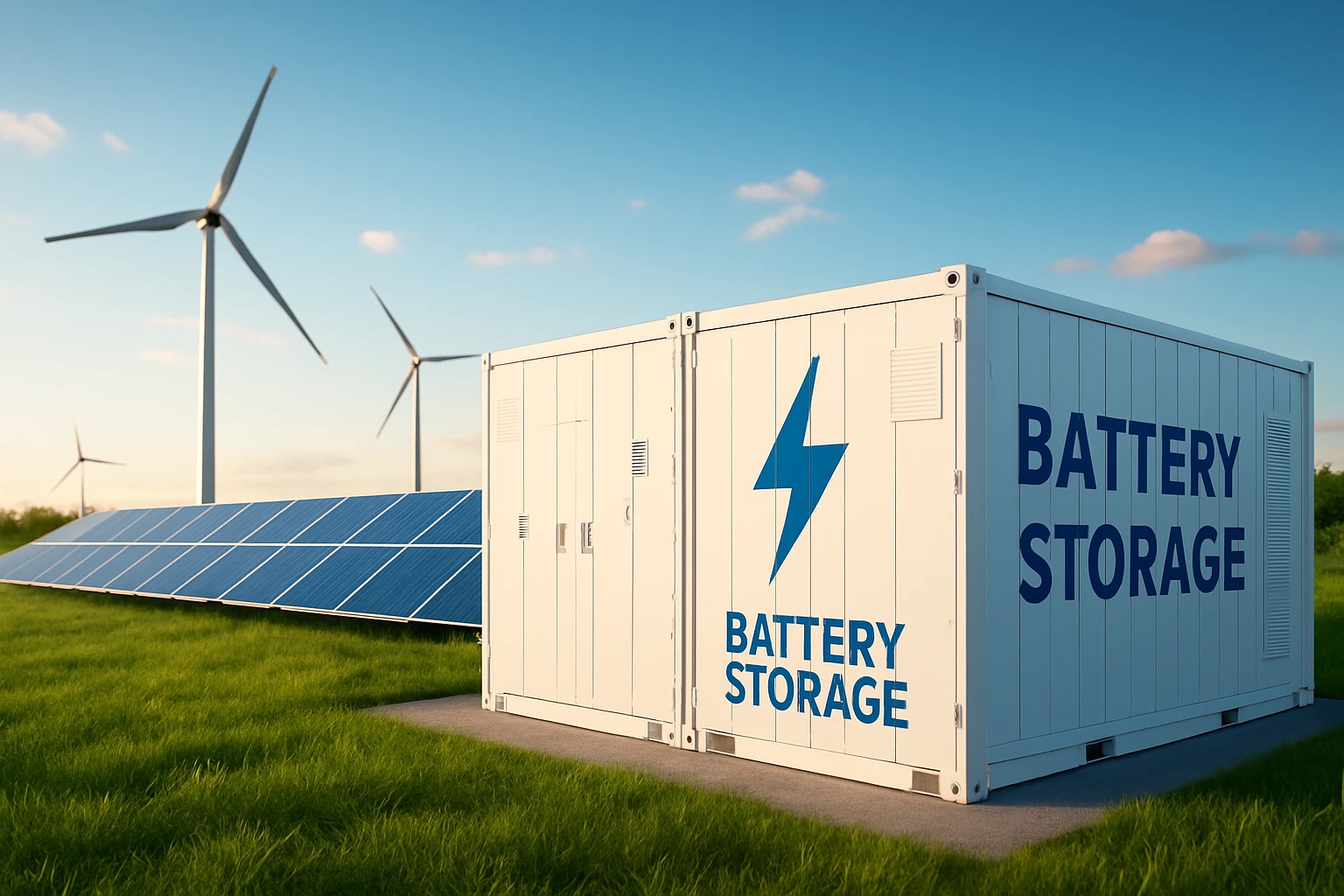
Explore how advanced battery storage systems are accelerating the global shift toward clean energy, making renewable power more reliable, efficient, and sustainable.
The world is entering a new era of clean energy. Solar panels, wind turbines, and other renewable sources are generating more power than ever before—but one major challenge remains: how to store energy efficiently.
That’s where battery energy storage systems (BESS) come in. These technologies are transforming how we produce, store, and use energy, bridging the gap between intermittent renewable supply and continuous power demand.
The Role of Energy Storage in the Clean Transition
Renewable energy—especially solar and wind—is inherently variable. The sun doesn’t always shine, and the wind doesn’t always blow. Without proper storage, much of that clean energy is wasted.
Battery storage systems provide the missing link by:
Capturing excess power when generation exceeds demand.
Releasing stored energy during peak hours or low production periods.
Stabilizing the grid against fluctuations and outages.
Reducing dependence on fossil-fuel backup systems.
In short, energy storage turns renewable energy from a supplemental source into a reliable foundation for the modern grid.
How Battery Storage Works
At its core, an energy storage system (ESS) converts electrical energy into chemical energy within batteries—most commonly lithium-ion, though alternatives like sodium-ion and solid-state batteries are emerging.
When demand increases or sunlight decreases, the stored energy is released back into the grid or used locally through microgrids and distributed systems.
Smart management software optimizes this process, balancing charge cycles and ensuring maximum efficiency.
Benefits of Battery Energy Storage
1. Grid Reliability and Stability
Batteries respond to grid fluctuations in milliseconds, maintaining voltage and frequency balance far faster than traditional power plants.
2. Energy Independence
Businesses and homeowners with solar panels paired with storage can generate, store, and use their own energy—reducing reliance on centralized grids and rising electricity costs.
3. Decarbonization and Emission Reduction
Battery storage allows renewable energy to replace fossil fuels for longer periods, accelerating carbon neutrality goals worldwide.
4. Peak Shaving and Cost Efficiency
Utilities and industries use batteries to reduce energy costs during peak demand, improving overall system economics.
Global Trends in Battery Storage
The battery storage market is expanding rapidly:
The International Energy Agency (IEA) projects global storage capacity will grow 15-fold by 2030.
China, the U.S., and Europe lead in large-scale deployment.
Falling battery prices—down nearly 80% over the last decade—make renewable storage economically viable.
New technologies like solid-state batteries and AI-driven energy management are pushing performance and longevity even further.
Real-World Applications
- Utility-Scale Projects:
Large BESS installations stabilize national grids and support renewable integration—helping countries achieve net-zero targets. - Commercial and Industrial Use:
Factories and data centers use on-site storage to ensure uptime, control energy costs, and meet sustainability goals. - Residential Systems:
Homeowners are increasingly adopting solar + storage setups to protect against outages and energy price spikes.
Challenges Ahead
While battery storage is transforming the clean energy landscape, key challenges remain:
Raw material supply chains (lithium, nickel, cobalt).
Recycling and second-life battery use for sustainability.
Policy and regulatory alignment to support large-scale deployment.
Companies like Arni Energy are addressing these issues through research, innovation, and circular energy system design.
The clean energy revolution cannot succeed without efficient storage.
Battery energy storage systems are the backbone of a sustainable future—empowering renewables to deliver reliable, affordable, and carbon-free power 24/7.
As technology continues to evolve, Arni Energy stands at the forefront of this transformation—developing smart, scalable battery solutions that power the world toward a greener tomorrow.
Written by the Arni Energy Solar Experts Team
📆 Updated: November 2025