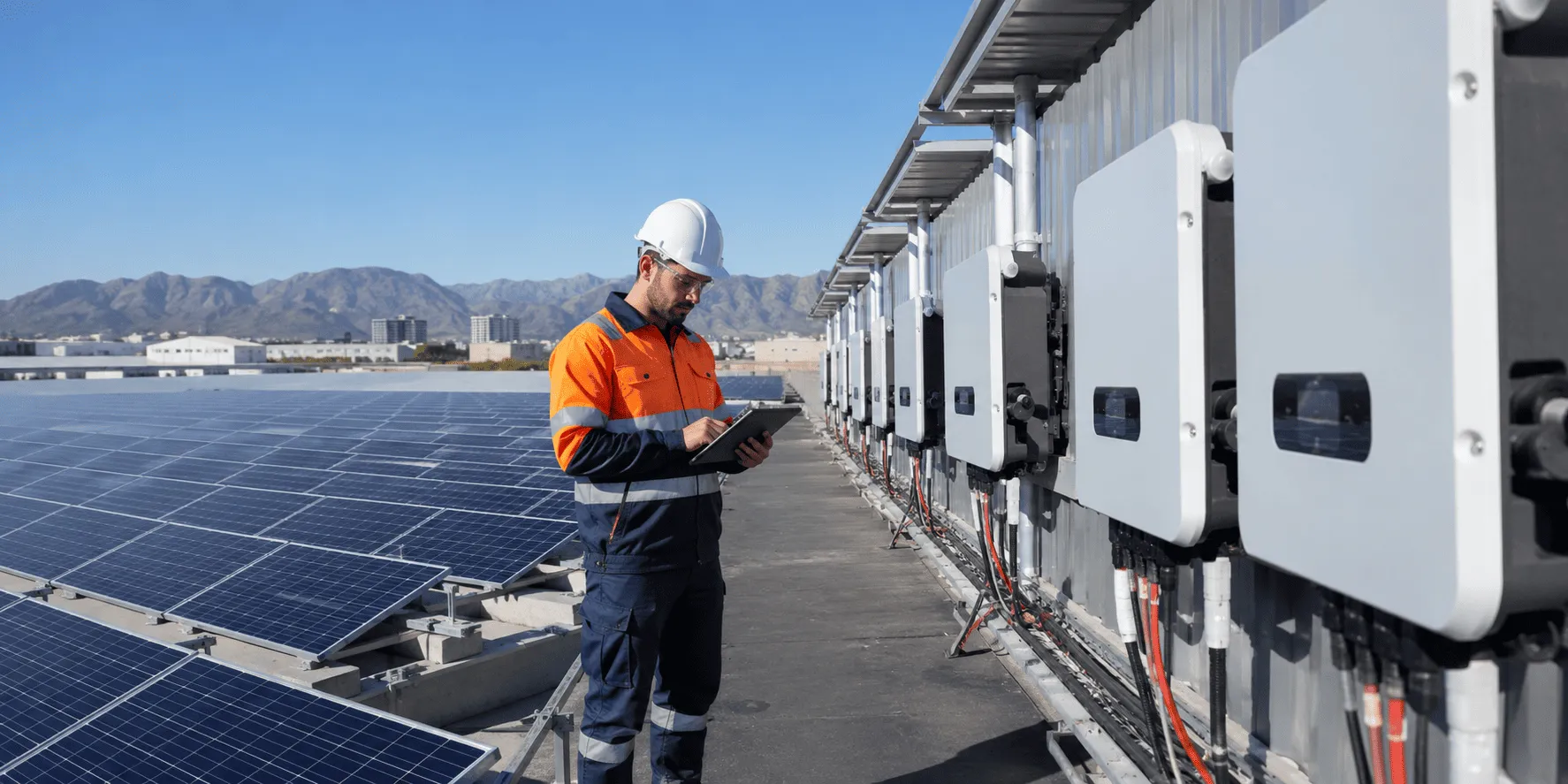
When discussing solar energy projects, most attention is usually focused on solar panels. However, in many commercial and industrial installations, the inverter plays a critical role in overall system performance, energy production, and return on investment.
An inverter converts the DC electricity generated by solar panels into usable AC power. But its role goes far beyond energy conversion. The type of inverter selected can influence system efficiency, monitoring capabilities, maintenance requirements, and long-term operational performance.
Why Is Inverter Selection Important?
Solar panels generate electricity, but the inverter acts as the control center of the entire system. An improperly selected inverter can limit energy production and reduce the overall value of the investment.
In commercial projects, inverter selection can affect:
- Actual energy output
- Overall system efficiency
- Monitoring capabilities
- Fault detection and troubleshooting
- Maintenance costs
- Future system expansion
For this reason, inverter selection should be evaluated from both technical and financial perspectives.
What Is a String Inverter?
A String Inverter is the most commonly used inverter type in commercial solar projects. In this configuration, multiple solar panels are connected together in a string and linked to a central inverter.
Key advantages of String Inverters include:
- Lower upfront cost
- Simpler installation
- Suitable for medium and large-scale projects
- Relatively straightforward maintenance
Because of these advantages, String Inverters are widely used in commercial and industrial solar systems.
Limitations of String Inverters
Despite their popularity, String Inverters may not be the best solution in every situation. When part of a solar array experiences shading, dirt accumulation, or performance variations, the output of the entire string can be affected.
This limitation becomes more important in projects with complex roof layouts or variable operating conditions and should be considered during the design phase.
How Do Micro Inverters Work?
In a Micro Inverter system, each solar panel has its own dedicated inverter. This allows every panel to operate independently, reducing the impact of underperformance in one section of the array.
The main benefits of Micro Inverters include:
- Panel-level monitoring
- Improved performance under partial shading
- Greater design flexibility
- Reduced impact of individual panel issues
These features make Micro Inverters an attractive option for specific commercial applications.
What Is a Smart Inverter?
A Smart Inverter is an advanced inverter technology that offers capabilities beyond basic power conversion. It provides enhanced control, monitoring, and communication functions that can improve overall system management.
Typical Smart Inverter features include:
- Advanced monitoring and analytics
- Intelligent energy management
- Real-time performance tracking
- Faster fault detection
- Improved grid interaction
For commercial and industrial projects, these capabilities can help optimize operations and reduce long-term maintenance costs.
Which Inverter Is Best for Commercial Solar Projects?
The answer depends on project requirements. In many commercial and industrial installations, String Inverters remain the preferred choice due to their cost-effectiveness and scalability.
However, projects with:
- Complex roof configurations
- Shading challenges
- Detailed monitoring requirements
may benefit more from Micro Inverters or Smart Inverter solutions.
The best choice should be based on both technical performance and financial objectives.
What Factors Should Be Considered When Choosing an Inverter?
Selecting an inverter involves more than comparing prices. Several project-specific factors must be evaluated.
Important considerations include:
- Solar system size
- Building type and installation layout
- Shading conditions
- Project budget
- Monitoring requirements
- Future expansion plans
These factors help determine which inverter technology delivers the greatest value over the system’s lifetime.
How Does the Inverter Affect ROI?
Many businesses focus primarily on equipment costs during procurement. However, inverter performance can significantly influence long-term energy production and operating expenses.
A properly selected inverter can:
- Maximize energy generation
- Reduce efficiency losses
- Simplify system management
- Lower maintenance costs
As a result, inverter selection is not only a technical decision but also a financial one.
Choosing the Right Inverter for Long-Term Performance
In commercial solar projects, the inverter is one of the most important components of the system. Whether the project uses a String, Micro, or Smart Inverter solution, the selection should be based on operational requirements, financial goals, and site conditions.
The better the inverter aligns with project needs, the greater the potential for long-term performance, efficiency, and return on investment.
Frequently Asked Questions
What is the role of an inverter in a solar system?
An inverter converts DC electricity generated by solar panels into AC power and manages system operation.
What are the advantages of a String Inverter?
Lower cost, simpler installation, scalability, and suitability for large commercial projects.
How is a Micro Inverter different from a String Inverter?
A Micro Inverter operates at the individual panel level, allowing each panel to perform independently.
What are the benefits of a Smart Inverter?
Advanced monitoring, intelligent energy management, real-time analytics, and improved grid interaction.
Which inverter is best for commercial solar projects?
The best choice depends on project size, shading conditions, monitoring requirements, budget, and long-term business objectives.