
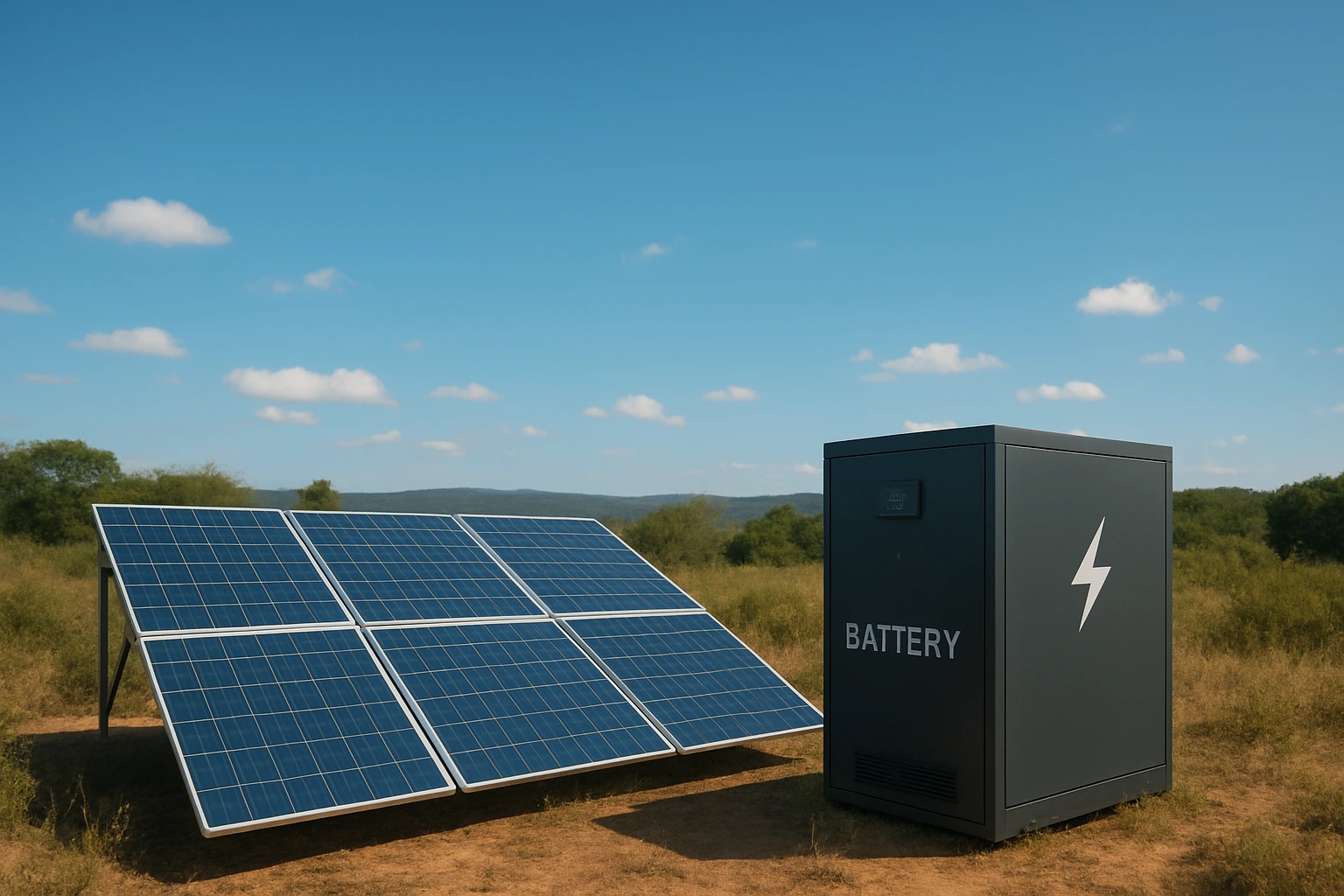
Discover how hybrid solar-battery systems are revolutionizing off-grid and backup power, enabling homes and businesses to achieve true energy independence and sustainability.
As global demand for clean and reliable energy increases, traditional power grids are struggling to keep up. Frequent outages, rising energy prices, and the need for sustainable alternatives are pushing individuals and organizations to look beyond the grid.
Enter the hybrid solar-battery system — a breakthrough that combines the generation power of solar energy with the storage capability of advanced battery systems. These solutions are redefining what it means to have energy independence in the modern world.
What Is a Hybrid Solar-Battery System?
A hybrid solar-battery system integrates solar panels, battery storage, and a smart inverter to create a self-sustaining energy ecosystem.
During the day, solar panels generate electricity. Excess power that isn’t immediately used is stored in batteries instead of being sent back to the grid. When the sun sets or demand increases, the stored energy seamlessly powers your home, business, or facility.
In essence, hybrid systems make renewable energy available day and night, ensuring continuous power even in remote or off-grid environments.
Key Components of a Hybrid Solar-Battery Setup
- Solar Panels (PV Modules) – Capture sunlight and convert it into direct current (DC) electricity.
- Hybrid Inverter – Converts DC into alternating current (AC) while intelligently managing energy flow between panels, batteries, and appliances.
- Battery Storage System (BESS) – Stores excess electricity for later use, typically using lithium-ion technology for efficiency and longevity.
- Energy Management Software – Monitors consumption patterns, predicts demand, and optimizes charging cycles.
This synergy between hardware and software allows hybrid systems to deliver clean, uninterrupted power at maximum efficiency.
Why Hybrid Solar-Battery Systems Are the Future
1. True Energy Independence
Hybrid systems allow users to generate, store, and consume their own energy — eliminating dependency on unstable grids and fluctuating utility prices.
For rural or island communities, this means reliable electricity even in places where traditional infrastructure is limited.
2. Sustainability and Carbon Reduction
By reducing reliance on fossil-fuel generators, hybrid systems directly cut greenhouse gas emissions.
Each kWh of stored solar power offsets carbon that would otherwise come from non-renewable sources.
3. Cost Efficiency and Long-Term Savings
Although initial installation costs can be higher, hybrid systems significantly reduce monthly energy bills.
With declining solar panel and battery prices, the payback period has dropped to as little as 3–5 years for residential users.
4. Uninterrupted Power Supply (UPS)
Hybrid systems act as instant backup during outages — powering essential appliances, communications, or industrial processes without delay.
This makes them ideal for business continuity, hospitals, telecoms, and smart homes.
Off-Grid Applications Around the World
- Remote Villages: Providing 24/7 electricity in rural Africa and Southeast Asia.
- Commercial Buildings: Using hybrid systems to manage peak demand and reduce grid dependency.
- EV Charging Stations: Storing solar energy to power electric vehicles sustainably.
- Disaster Relief Zones: Deployable containerized hybrid systems ensuring emergency power during crises.
Arni Energy is among the pioneers developing modular hybrid solutions that can scale from small households to large industrial operations.
The Role of Battery Technology in Hybrid Systems
Modern lithium-ion and lithium-iron-phosphate (LiFePO₄) batteries are the backbone of hybrid systems.
Their high energy density, long cycle life, and rapid charging capability make them ideal for renewable integration.
Moreover, AI-powered battery management systems (BMS) continuously monitor temperature, charge rates, and health metrics — ensuring optimal performance and safety.
Environmental & Economic Benefits
Hybrid solar-battery systems not only cut costs but also support national sustainability goals:
- Reduced CO₂ emissions and diesel dependence
- Better utilization of renewable resources
- Increased grid resilience through distributed generation
Governments in the UAE, Europe, and the U.S. are already offering tax incentives and net metering benefits for hybrid installations, accelerating adoption globally
Challenges and Future Outlook
While adoption is rising, key challenges remain in:
- Battery recycling and material sourcing.
- Integration with older grid infrastructures.
- Consumer awareness and upfront investment barriers.
However, ongoing innovations in solid-state batteries, AI-based forecasting, and virtual power plants (VPPs) are set to overcome these obstacles, making hybrid systems mainstream by 2030.
Hybrid solar-battery systems represent the next frontier in clean, self-sufficient energy.
By merging solar generation with smart storage, they enable users to control their power usage, reduce costs, and contribute to a sustainable planet.
At Arni Energy, we are committed to advancing hybrid technologies that empower communities and industries with reliable, renewable energy — anywhere, anytime.
Written by the Arni Energy Solar Experts Team
📆 Updated: November 2025