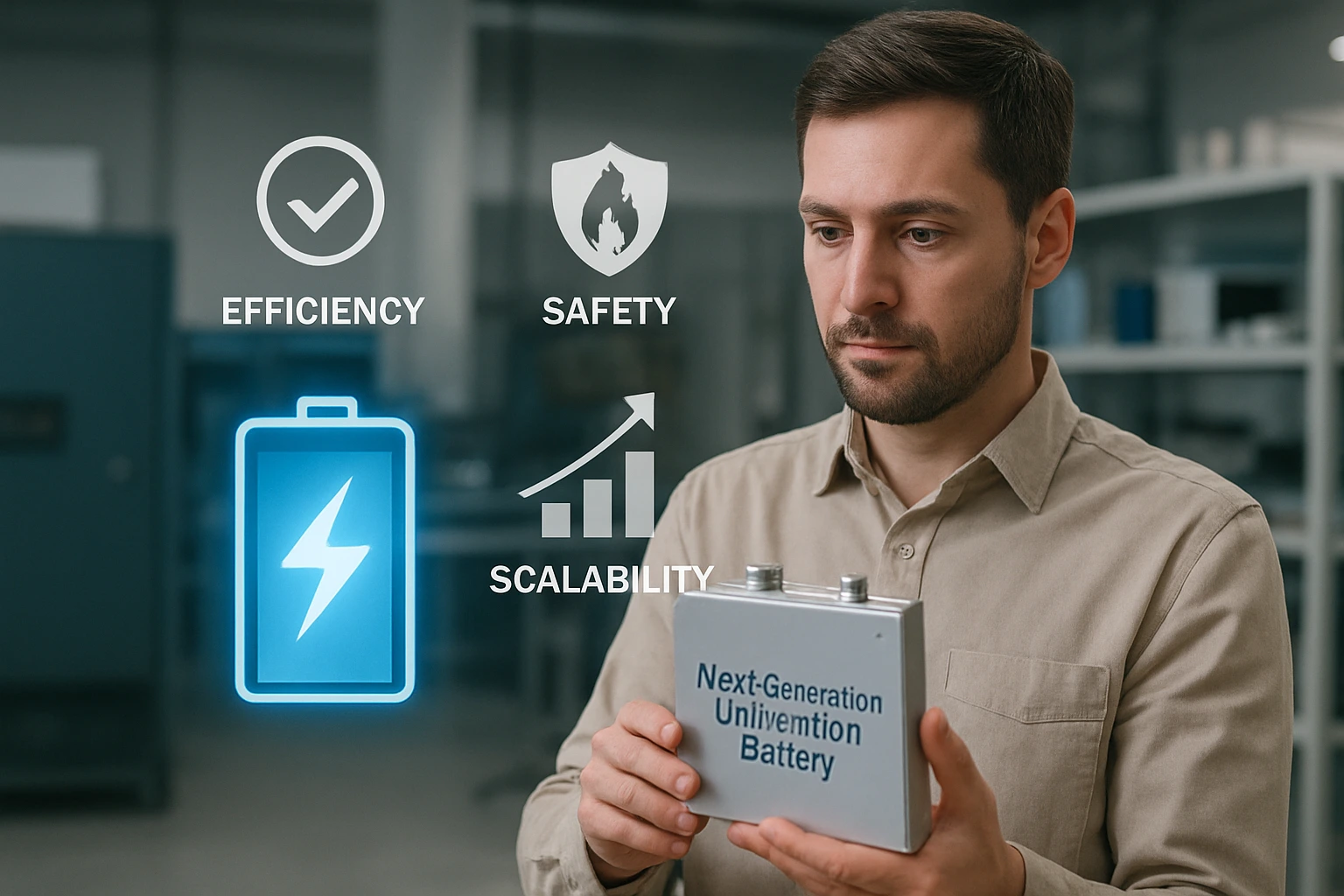
Explore how next-generation lithium-ion batteries are transforming energy storage with higher efficiency, improved safety, and scalable designs for the future of clean power.
Lithium-ion batteries have powered the modern energy revolution — from smartphones to electric vehicles (EVs) and large-scale renewable storage.
But as the world moves toward a carbon-free future, the demand for batteries that are safer, more efficient, and more scalable has never been greater.
Next-generation lithium-ion technology is pushing the boundaries of what’s possible — enabling longer lifespans, faster charging, and smarter energy management systems that redefine global energy infrastructure.
The Evolution of Lithium-Ion Technology
Since their commercial debut in the early 1990s, lithium-ion batteries (Li-ion) have seen continuous innovation in materials, chemistry, and design.
Traditional lithium-ion systems rely on graphite anodes, liquid electrolytes, and nickel-based cathodes — but modern research is unlocking breakthroughs that improve performance and sustainability.
Key innovations include:
Solid-state electrolytes that eliminate flammable liquids and improve safety.
Silicon and lithium-metal anodes offering up to 5× higher energy density.
Cobalt-free cathode materials that reduce cost and ethical concerns.
AI-optimized Battery Management Systems (BMS) for predictive maintenance and extended lifecycle.
Together, these advancements mark the beginning of a new era: the next-generation lithium-ion battery.
Higher Efficiency and Energy Density
The biggest challenge in traditional lithium-ion batteries has been the trade-off between capacity, weight, and lifespan.
Next-generation designs are overcoming this through:
Advanced anode materials (e.g., silicon, graphene) for improved charge capacity.
High-voltage electrolytes that boost efficiency per cell.
3D electrode architecture to enable faster ion flow and lower internal resistance.
As a result, these batteries can store 30–50% more energy in the same volume — translating to longer range in EVs and more power capacity in renewable storage systems.
Improved Safety and Thermal Stability
Safety remains one of the most critical factors in large-scale energy storage.
Conventional lithium-ion systems can experience thermal runaway if improperly managed.
Next-gen batteries tackle this issue with:
Solid or gel electrolytes that are non-flammable and heat-resistant.
Advanced separators that block short circuits.
Real-time thermal monitoring powered by AI and IoT sensors.
These improvements dramatically reduce the risk of fire, overheating, and degradation — ensuring greater confidence for both consumers and grid operators.
Scalability for the Energy Transition
One of the major advantages of lithium-ion technology is its scalability — from small consumer devices to multi-megawatt-hour (MWh) industrial storage systems.
Next-generation architectures enhance scalability by:
Reducing material dependency and production complexity.
Supporting modular energy storage designs that can easily expand with demand.
Offering faster charging and higher power output for grid balancing and peak shaving.
This adaptability makes Li-ion batteries essential for applications ranging from home solar storage to utility-scale renewable integration.
Sustainability and Circular Economy Impact
While performance is critical, sustainability defines the future of energy storage.
Next-generation Li-ion batteries are designed for:
Recyclability — easier separation of materials and lower environmental footprint.
Second-life applications — using retired EV batteries in stationary energy storage.
Reduced reliance on rare materials like cobalt and nickel.
Companies like Arni Energy are leading initiatives in battery recycling and reconditioning, extending value across the entire product lifecycle.
Applications Across Sectors
Sector | Use Case | Benefit |
Renewable Energy | Grid-scale energy storage | Load balancing, backup power |
Electric Vehicles | EV battery packs | Extended driving range, faster charging |
Commercial & Industrial | Microgrids and UPS systems | Energy independence, peak demand reduction |
Residential | Solar + storage systems | 24/7 renewable power for homes |
The flexibility of next-gen lithium-ion batteries allows them to power both the world’s largest infrastructures and its smallest homes.
Future Outlook: Solid-State and Beyond
The next frontier in battery evolution lies in solid-state technology, where lithium moves through a solid medium instead of liquid electrolyte.
These batteries promise:
2× energy density
5× charging speed
Zero leakage or explosion risk
Although large-scale commercialization is still in development, many experts believe solid-state batteries will dominate the market by 2030 — enabling electric aviation, long-duration energy storage, and decentralized clean power systems.
Next-generation lithium-ion batteries represent the foundation of a sustainable, electrified future.
With innovations improving efficiency, safety, and scalability, these systems will play a critical role in accelerating the world’s transition toward renewable energy.
At Arni Energy, we are committed to advancing smart battery technologies that deliver superior performance and reliability — empowering industries, cities, and individuals to store clean energy efficiently and safely.
Written by the Arni Energy Solar Experts Team